Middle Ages

The Middle Ages, the medieval period of European history between the fall of the Roman Empire and the beginning of the Renaissance, are sometimes referred to as the Dark Ages.
Featured Overview

Illustration by Eduardo Ramón Trejo. Photos from Getty Images.

Start Here

The centuries following the fall of the Roman Empire in 476 A.D. are often referred to as the Dark Ages—but were they really?

One of the worst plagues in history arrived at Europe's shores in 1347. Five years later, some 25 to 50 million people were dead.

People living in the Middle Ages likely used or came across these objects in their daily lives.

The French heroine and saint was labeled a heretic, fraud, sorceress and cross-dresser.

Charlemagne

Charlemagne

In the 9th Century, Charlemagne rules over most of Europe and brings a renaissance of religion and culture to the continent.

3:39m watch

Explore All Related Topics

Middle Ages

Land was traded for loyalty and service under the system.

These factors helped seal his triumph over the English king.

This 230-foot embroidery tells the story of the Norman Conquest.

The merry-go-round draws inspiration from medieval war games.

Advertisement

In 1912, a rare book dealer acquired an ancient manuscript that he claimed would 'startle the scientific world.' Cryptologists are still trying to understand its pages.

Advertisement
Advertisement

The Hundred Years' War was intermittently fought by France and England from 1337 to 1453 over territorial disputes and competing claims to the French throne.

People living in the Middle Ages likely used or came across these objects in their daily lives.

In the 15th century, the Vikings vanished from the island after more than 400 years of living there—what happened?

The Middle Ages have yielded a series of amazing archaeological discoveries, from medieval swords to buried castle remains to evidence of zombie fears.

Advertisement

A few of the accused may have been actual pedophiles or serial killers, but many were beggars, hermits or recent émigrés who were tortured into confessions.

One of the worst plagues in history arrived at Europe's shores in 1347. Five years later, some 25 to 50 million people were dead.

Advertisement
Advertisement
Advertisement

Some scapegoated the gods, or their enemies. Others blamed planetary alignments. For many, though, it was just 'bad air.'

The town of Ferrara managed to avoid even a single death from the widespread contagion. How did they do it?

Way back in the 14th century, public health officials didn't understand bacteria or viruses, but they understood the importance of keeping a distance and disinfecting.

For over 1,000 years, European fugitives found asylum in churches.

Advertisement

The French heroine and saint was labeled a heretic, fraud, sorceress and cross-dresser.

Elizabeth I, for one, was known to drink from a unicorn horn cup, believing that if poison touched it, it would explode.

Some in the powerful medieval order were greased up and roasted until they 'admitted' to perversions like sodomy, cat worshipping and navel kissing.

They held the pontiff hostage for three harrowing days. He never recovered.

Advertisement
Advertisement

A newly translated letter written by a medieval archbishop reveals the nun's shenanigans, which allegedly included crafting a dummy in the likeness of her body.

Here are the most astonishing facts about Christianity's holy warriors.

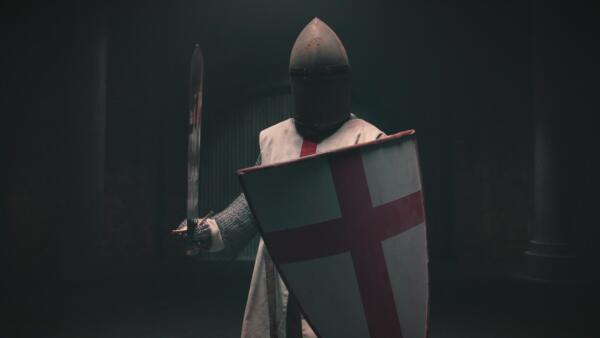
Well-trained, heavily-armored knights represented a triumph of military might during the Middle Ages.

Knights in the Middle Ages were heavily-armed and prone to violence.

Advertisement

Swords and lances weren't the only weapons of choice during bloody battles of the Middle Ages.

Along with more than a year of literal darkness, the solar dimming served up cold, starvation, economic stagnation and plague.

“I held it up in the air and I said ‘Daddy, I found a sword!’"

Advertisement
Advertisement
Advertisement

Scientists now believe the plague spread too fast for rats to be the culprits.

The Hagia Sofia is a grand mosque in Istanbul, Turkey, that was originally built as a basilica for the Greek Orthodox Christian Church in the 4th century A.D.

And they're not always your usual medieval money pit. Some have ghosts or rumors of hidden treasure.

Advertisement

Their code of conduct was designed to keep the warrior-knights humble, chaste and—most of all—obedient.

They weren't all battles and bloodshed. There was also coexistence, political compromise, trade, scientific exchange—even love.

The United States has recognized Jerusalem as Israel’s capital since December 2017—despite a dueling claim from Palestine.

For centuries, people have had unusual fixations with new materials.

Advertisement
Advertisement

These were special spots for the Brotherhood.

Where they built, fought and prayed.

Kings and popes told the young warriors for God to go home—but they persisted.

The much-feared day was the beginning of the end for the powerful warriors.

Advertisement

In the 14th century, the Moroccan wanderer Ibn Battuta spent nearly 30 years traveling some 75,000 miles across Africa, the Middle East, India and Southeast Asia.

The Tower of London is one of the world's oldest and most famous prisons, although it was initially built in the 11th century as fortress to protect the city.

Advertisement
Advertisement
Advertisement

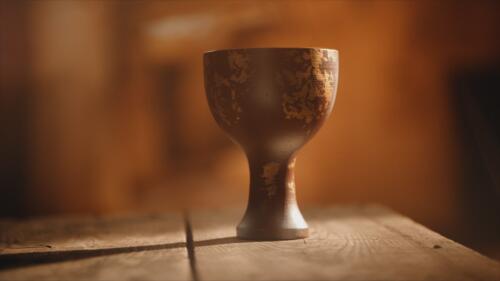
The Holy Grail, in medieval legend, is the cup or platter used by Jesus at the Last Supper. According to legend, it can confer miraculous powers on those who encounter it.

Medieval historian and renowned Templar scholar Dan Jones sorts through the mounds of fact and fiction surrounding the storied military order.

The Knights Templar was a powerful medieval organization of devout Christians which protected visitors to the Holy Land and carried out military operations.

We’ve all heard stories about King Arthur of Camelot, who according to medieval legend led British forces (including his trusted Knights of the Round Table) in battle against Saxon invaders in the early sixth century. But was King Arthur actually a real person, or simply a hero of Celtic mythology? Though debate has gone on […]

Advertisement

Find out how the Battle of Hastings forever changed England—and the English language.

The centuries following the fall of the Roman Empire in 476 A.D. are often referred to as the Dark Ages—but were they really?

The Romans described the civilizations that lived beyond their borders as savage “barbarians,” but these ancient tribes were anything but primitive.

The series of intermittent conflicts between France and England that took place during the 14th and 15th centuries wasn’t classified as the “Hundred Years’ War” until 1823. Traditionally, the war is said to have begun in 1337 when Philip VI attempted to reclaim Guyenne (part of the region of Aquitaine in southwestern France) from King […]

Advertisement
Advertisement

Scientists and historians still aren't sure what led people in Strasbourg to dance themselves to death.

A pair of historians claim they have discovered the elusive Holy Grail inside a Spanish basilica.

Skeletons buried deep beneath a square in London yield information about how one of history’s deadliest plagues spread through 14th-century Britain.

Today the phrase “throw down the gauntlet” means to challenge or confront someone, but in its earliest use it wasn’t meant as a metaphor, but was a physical action intended to issue a formal challenge to a duel. The word itself comes from the French word “gantelet,” and referred to the heavy, armored gloves worn […]

Advertisement

Get the facts on seven of the most prolonged standoffs in military history.

From the knights of medieval legends to Indiana Jones, the holy grail has been the most sought-after Christian relic in popular culture for centuries. The grail is most commonly identified as the cup that Jesus drank from at the Last Supper and that Joseph of Arimathea used to collect Jesus’s blood when he was crucified.  […]

Explore seven surprising facts about Joan of Arc, the courageous teenager who rose from obscurity to lead the French army.

After Christian fighters captured Jerusalem during the First Crusade, groups of pilgrims from across Western Europe began visiting the Holy Land. Around 1118, a French knight named Hugues de Payens founded a military order devoted to protecting these pilgrims, calling it the Poor Knights of the Temple of King Solomon—later the Knights Templar.  In 1129, […]

Advertisement
Advertisement
Advertisement

As researchers announce that bloodletting might have some benefits after all, find out more about this ancient treatment’s long history.

Advertisement
Advertisement
Advertisement
Advertisement

A new study suggests that humans, not vermin, spread the Black Death, and that the disease may not have been bubonic plague after all.

Get the facts on the mysterious medieval order known as the Knights Templar, which was dissolved 700 years ago.

The Black Death was a devastating global epidemic of bubonic plague that struck Europe and Asia in the mid-1300s.

The Crusades were a series of religious wars between Christians and Muslims, occurring from 1096 and 1291, primarily to secure control of Middle Eastern holy sites.

Advertisement
Advertisement
Advertisement

People use the phrase “Middle Ages” to describe Europe between the fall of Rome in 476 CE and the beginning of the Renaissance in the 14th century.

Joan of Arc, a peasant girl, became a military leader in medieval France. After being burned at the stake by authorities, she became a beloved martyr and saint.

Siege of Orleans: Background In 1415, the Hundred Years’ War between England and France entered a crucial phase when the young King Henry V (1386-1422) of England invaded France and won a series of decisive victories against the forces of King Charles V...

Charles the Great was a medieval king who established a vast Carolingian empire and was eventually crowned Holy Roman Emperor.

Advertisement
Advertisement
Advertisement